History
 These unusual and quirky little instruments started their commercial life back in
1980 when clever chaps in white smocks at Suzuki HQ, Japan released two futuristic
gadgets: the PC-27 Portachord/Tronichord prototypes and OM-27 Omnichord.
These unusual and quirky little instruments started their commercial life back in
1980 when clever chaps in white smocks at Suzuki HQ, Japan released two futuristic
gadgets: the PC-27 Portachord/Tronichord prototypes and OM-27 Omnichord.
Both models featured 27 playable chords and a touchplate. The PC-27 had only two controls on the top panel: Chord Volume and Sonic Strings Volume. The model numbers were derived from the 27 playable Major, Minor and 7th chords.
Despite its clever design, the general lack of features meant the Tronichord would likely be short lived. This would be a pity as the Marketing Department realised the concept could be developed into a useful and very different Music Instrument. 1981 saw the main drive placed on the far more ergonomic, feature rich OM-27 Omnichord. For many, this is regarded as the first true incarnation of the Series.
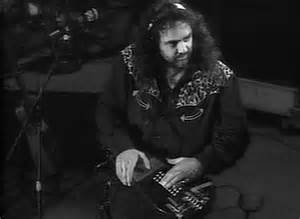 The Omnichord was quickly adopted by singers, songwriters, musicians, and the actual
target audience: people who wanted to play an instrument but had never found the time
to learn. Like an acoustic guitar it is ideal as an instrument to accompany vocals
by simply strumming. Owners did not need any previous musical knowledge or even learn
chord shapes. Just press a chord button and strum away. The Sonic Strings, or
strumplate, would adopt the notes of the chord. Changing to another chord button
would cause the notes of the strumplate also to change. This makes it very quick to
learn, impossible to play wrong notes and the perfect tool for songwriters who can
play with chord progressions on the go. Whilst many musicians dismissed the Omnichord
as a toy, and some still do today, those with a little more imagination and an
understanding of music soon found uses for this most unique of musical instruments.
The Omnichord was quickly adopted by singers, songwriters, musicians, and the actual
target audience: people who wanted to play an instrument but had never found the time
to learn. Like an acoustic guitar it is ideal as an instrument to accompany vocals
by simply strumming. Owners did not need any previous musical knowledge or even learn
chord shapes. Just press a chord button and strum away. The Sonic Strings, or
strumplate, would adopt the notes of the chord. Changing to another chord button
would cause the notes of the strumplate also to change. This makes it very quick to
learn, impossible to play wrong notes and the perfect tool for songwriters who can
play with chord progressions on the go. Whilst many musicians dismissed the Omnichord
as a toy, and some still do today, those with a little more imagination and an
understanding of music soon found uses for this most unique of musical instruments.
OMNIFACT: 40,000 Brown and Cream Omnichord model OM-27s were beamed down in 1981. Most of them were teleported from Suzuki HQ to the USA, followed by the UK.
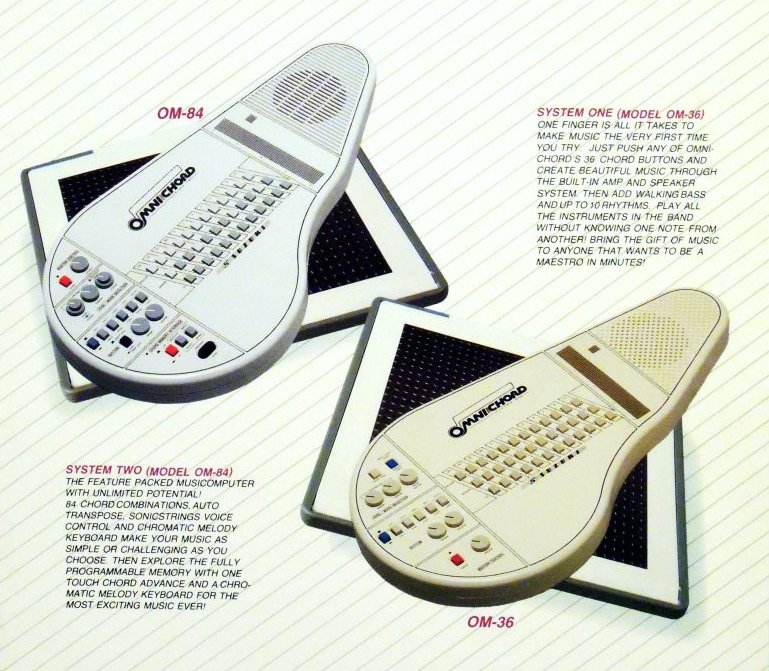 Next came the OM-36 (System One) and OM-84 (System Two). The OM-36 had 36 chord
variations and the OM-84 had, you guessed it, a whopping 84. The 84 chord system
has stuck and the same combination and layout appear on almost all models since,
including the latest version: Qchord. The SonicStrings/Strumplate was vastly
improved on the new instruments, although some late model OM-27s were fitted with
this design, and has remained with us right through to the Qchord. The new
touchplate design meant you are no longer required to use the conductive rubber
plectrum.
Next came the OM-36 (System One) and OM-84 (System Two). The OM-36 had 36 chord
variations and the OM-84 had, you guessed it, a whopping 84. The 84 chord system
has stuck and the same combination and layout appear on almost all models since,
including the latest version: Qchord. The SonicStrings/Strumplate was vastly
improved on the new instruments, although some late model OM-27s were fitted with
this design, and has remained with us right through to the Qchord. The new
touchplate design meant you are no longer required to use the conductive rubber
plectrum.
 As technology progressed, Omnichord evolved into the OM-100 with a new, more
ergonomic design. It soon found itself in places Suzuki had never envisioned.
The tactile approach of the Omnichord, and later the Qchord, has become an award
winning in-road to music for those with special needs. It has helped choirs to sing
out their praises, introduced children to music in schools and strung together chord
sequences that have become some of the greatest songs written in the last three
decades. As with many 80s gadgets it soon developed cult status, with many musicians
utilizing its unique sound in their own music and taking advantage of the visuals
when performing.
As technology progressed, Omnichord evolved into the OM-100 with a new, more
ergonomic design. It soon found itself in places Suzuki had never envisioned.
The tactile approach of the Omnichord, and later the Qchord, has become an award
winning in-road to music for those with special needs. It has helped choirs to sing
out their praises, introduced children to music in schools and strung together chord
sequences that have become some of the greatest songs written in the last three
decades. As with many 80s gadgets it soon developed cult status, with many musicians
utilizing its unique sound in their own music and taking advantage of the visuals
when performing.
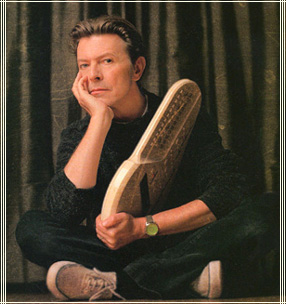
 Our cheeky little instrument can be found on album credits and on stage from the
early 80s to present day. The Human League had their own Omnichord Podium for live
use, David Bowie opened the 2001 Benefit Concert for New York City with his, the
late John Peel made a cameo appearance on an album called Omnichord, and Brian Eno
strummed away for Bono, Pavarotti and other Passengers. Moving forward into 2014,
many more artists are finding the Omnichord works for them and used prices are
rapidly increasing beyond their original retail cost. MIDI became available on
certain models: OM-200M, OM-250M and OM-300, opening new doors for those interested
in soundscaping and music production.
Our cheeky little instrument can be found on album credits and on stage from the
early 80s to present day. The Human League had their own Omnichord Podium for live
use, David Bowie opened the 2001 Benefit Concert for New York City with his, the
late John Peel made a cameo appearance on an album called Omnichord, and Brian Eno
strummed away for Bono, Pavarotti and other Passengers. Moving forward into 2014,
many more artists are finding the Omnichord works for them and used prices are
rapidly increasing beyond their original retail cost. MIDI became available on
certain models: OM-200M, OM-250M and OM-300, opening new doors for those interested
in soundscaping and music production.
As we entered the 90s so the last of the 3rd generation Omnichords was released; model OM-300. This is the only ivory coloured version with MIDI as standard and included chord sequencer and revised sound palette. OM-100 through 300 shared many similarities and some parts are cross compatible, unlike OM-27 and System One/Two.
To Boldly Q...
 By the time manufacturing of the OM-300 finished, sales were dropping and the
Omnichord was largely viewed as old fashioned by consumers. The world was ready
for something fresh and exciting, and so this curious little instrument went for a
serious makeover, or should we say regeneration.
By the time manufacturing of the OM-300 finished, sales were dropping and the
Omnichord was largely viewed as old fashioned by consumers. The world was ready
for something fresh and exciting, and so this curious little instrument went for a
serious makeover, or should we say regeneration.
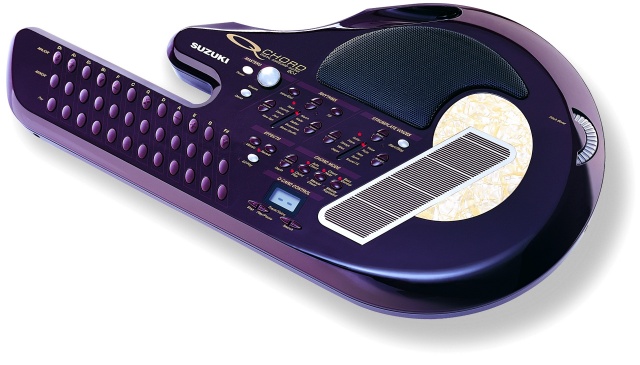
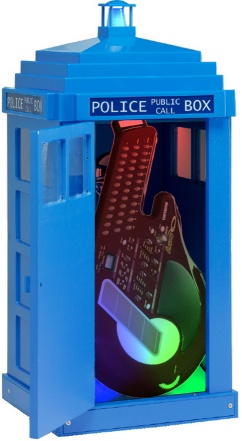 Just like the musicians who have owned one, it became a master in the art of
reinvention. As the world rolled into a new millennium, the Omnichord continued
its journey through time and space, bearing a new name: Qchord. The effects were
instant and a new generation of Omnichord/Qchord players quickly discovered the
joys of being Q. Almost exactly the same size as an OM-27, the Qchord is instantly
recognizable with its cutaway design. The basic layout of chord buttons and
SonicStrings remain unchanged from the OM-100-300 series. Pitch bend wheel was
added which affects the strumplate sounds only. The sound palette and styles were
completely renewed and the instrument received an expansion slot for song playback
and additional style cartridges. The amplification and speaker was also redesigned
to add brighter top end and ported bass.
Just like the musicians who have owned one, it became a master in the art of
reinvention. As the world rolled into a new millennium, the Omnichord continued
its journey through time and space, bearing a new name: Qchord. The effects were
instant and a new generation of Omnichord/Qchord players quickly discovered the
joys of being Q. Almost exactly the same size as an OM-27, the Qchord is instantly
recognizable with its cutaway design. The basic layout of chord buttons and
SonicStrings remain unchanged from the OM-100-300 series. Pitch bend wheel was
added which affects the strumplate sounds only. The sound palette and styles were
completely renewed and the instrument received an expansion slot for song playback
and additional style cartridges. The amplification and speaker was also redesigned
to add brighter top end and ported bass.
OM-108
 Robbie Williams once sang, Let Me Entertain You, and for over 20 years the Qchord
has done just that. By the end of 2019, and after huge interest in Omnichords,
partly due to OmniFest and TikTok users playing tunes from Adventure Time and
Steven Universe, the QC1 was selling out fast and becoming hard to find. In 2020
Suzuki withdrew the model from production and many thought it was game over for the
Omnichord. Prices of older models climbed from under £100 to £500 or £600.
Robbie Williams once sang, Let Me Entertain You, and for over 20 years the Qchord
has done just that. By the end of 2019, and after huge interest in Omnichords,
partly due to OmniFest and TikTok users playing tunes from Adventure Time and
Steven Universe, the QC1 was selling out fast and becoming hard to find. In 2020
Suzuki withdrew the model from production and many thought it was game over for the
Omnichord. Prices of older models climbed from under £100 to £500 or £600.
And then, to celebrate 70 years, Suzuki announced they would be re-printing and re-imagining, Suzuki's words, the Omnichord. Social media users mused over the meaning of this. Would it be a re-release of the OM-27? Would it be an app for your phone? And then came the teaser videos. See the OM-108 page.
For more, check out the complete model evolution with descriptions and photos of every model, starting with Portachord/Tronichord.