The short answer
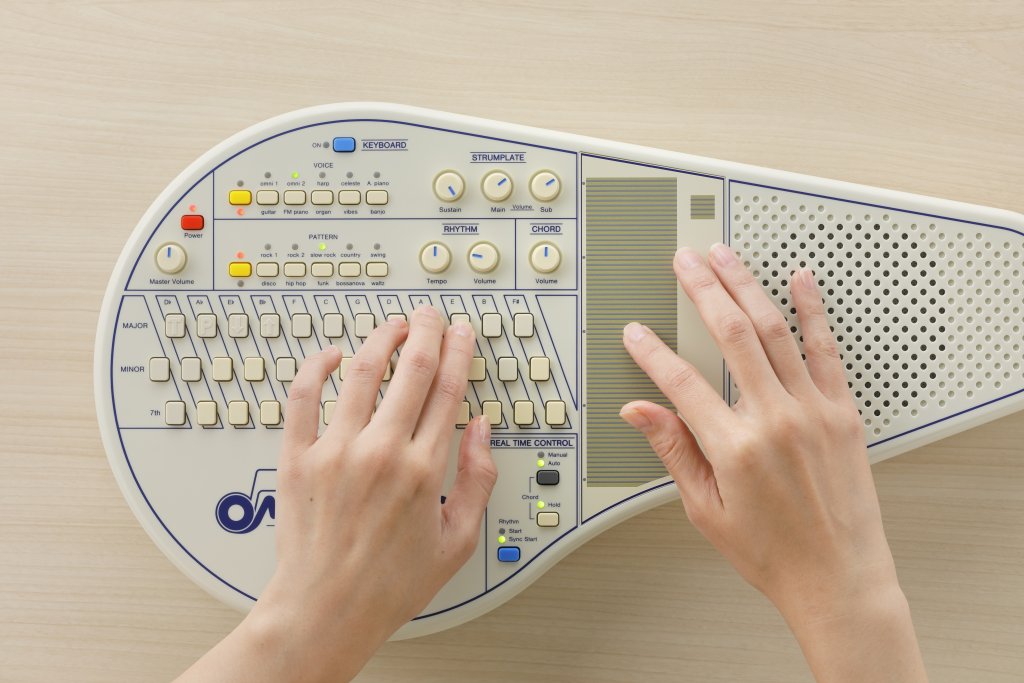
An Omnichord is an electronic musical instrument made by Suzuki. It combines chord buttons, automatic rhythm accompaniment and a touch-sensitive strumplate, allowing players to create full, shimmering arrangements without needing traditional keyboard or guitar skills.
The first Suzuki Omnichord models appeared in the early 1980s and quickly developed a reputation for being friendly, portable and a little bit magical. Press a chord button, brush the strumplate, and the instrument plays notes that fit the chord you have chosen.
In one sentence: an Omnichord lets you choose chords with one hand and strum electronic strings with the other.
Try one now
Start making music with OH-84 Lite.
The quickest way to understand the Omnichord idea is to press a chord and strum. OH-84 Lite runs in your browser and gives you a playable online instrument with chord buttons, strumplate voices and keyboard mode. It is best on desktop, laptop and larger tablet screens; OH-27 is the Android app for mobile play.

How does an Omnichord work?
Most Omnichords have three main ideas working together. The chord buttons choose the harmony, the rhythm section supplies accompaniment, and the strumplate plays electronic notes that match the chord. This means beginners can make pleasing music quickly, while experienced musicians can use the instrument for songwriting, layering, performance and unusual textures.
Chord buttons
Press a major, minor or seventh chord button to choose the harmony.
SonicStrings
Brush the strumplate to play notes that automatically fit the selected chord.
Accompaniment
Many models include rhythms, bass and chord backing for instant song ideas.
Pick up and play
The design makes it friendly to singers, writers and people new to instruments.
Is it like an autoharp?
Yes, in spirit. An autoharp lets you choose chords and strum strings; an Omnichord turns that idea into an electronic instrument with buttons, rhythms, sounds and a touch-sensitive playing surface. It is why people often describe the Omnichord as an electronic autoharp, although its sound and personality are very much its own.
Do you need to read music?
No. That accessibility is a large part of the charm. If you know the chord names for a song, or can follow simple chord symbols, you can begin experimenting almost immediately. This made the Omnichord useful for beginners, songwriters, schools, choirs, music therapy, ambient music, pop recordings and anyone who wanted an instrument that did not behave like a conventional keyboard or guitar.
Which Omnichord models exist?
The story begins with the PC-27 Tronichord and the original OM-27, then continues through models such as the OM-36, OM-84, OM-100, OM-200M, OM-250M, OM-300 and the later Qchord. Suzuki revived the Omnichord name with the current OM-108, which brings the idea back for a new generation.
For the full illustrated timeline, visit the Omnichord Heaven Omnipedia model guide.
Why are Omnichords popular again?
Omnichords have a sound that is warm, nostalgic and instantly recognisable. They also look wonderfully unusual, which helps explain their second life in bedroom pop, ambient music, TikTok clips, YouTube videos, live performance and artist photos. Some players use them because they are easy to approach; others use them because they sound like nothing else.
Where should I start?
If you are new to Omnichords, start with the model guide, then visit the manuals and archive pages. If you already own one and need help, the repairs and parts section is the best next stop. If you want the current official model, the OM-108 shop page has the latest Omnichord Heaven ordering information.
Omnipedia
Identify models and follow the full Suzuki Omnichord story.
Start playingHow to play
Learn first chords, strumplate technique and safe beginner habits.
FAQOfficial answers
Quick answers about prices, artists, buying, repairs and the OM-108.
ManualsOwners guides
Download original manuals for Omnichords and Qchords.
WorkshopRepairs and parts
Find repair help, service notes, schematics and parts.
Current modelOM-108 shop
Buy the current Suzuki Omnichord OM-108 from Omnichord Heaven.